Coral Gables was one of America’s first planned cities. In the 1920s developer George Merrick laid out wide boulevards, coral-rock plazas and a strict architectural code that still shapes the city today. A century later it remains one of Miami’s most desirable places to live — green, quiet and close to everything.
A city with rules (and that is the point)
The Gables is famous for its building code. Exterior colors, roof materials and even mailbox styles are regulated, and renovations go through a design review board. Buyers sometimes find the process slow, but the result is a city where streets look cared for and property values hold up well over time.
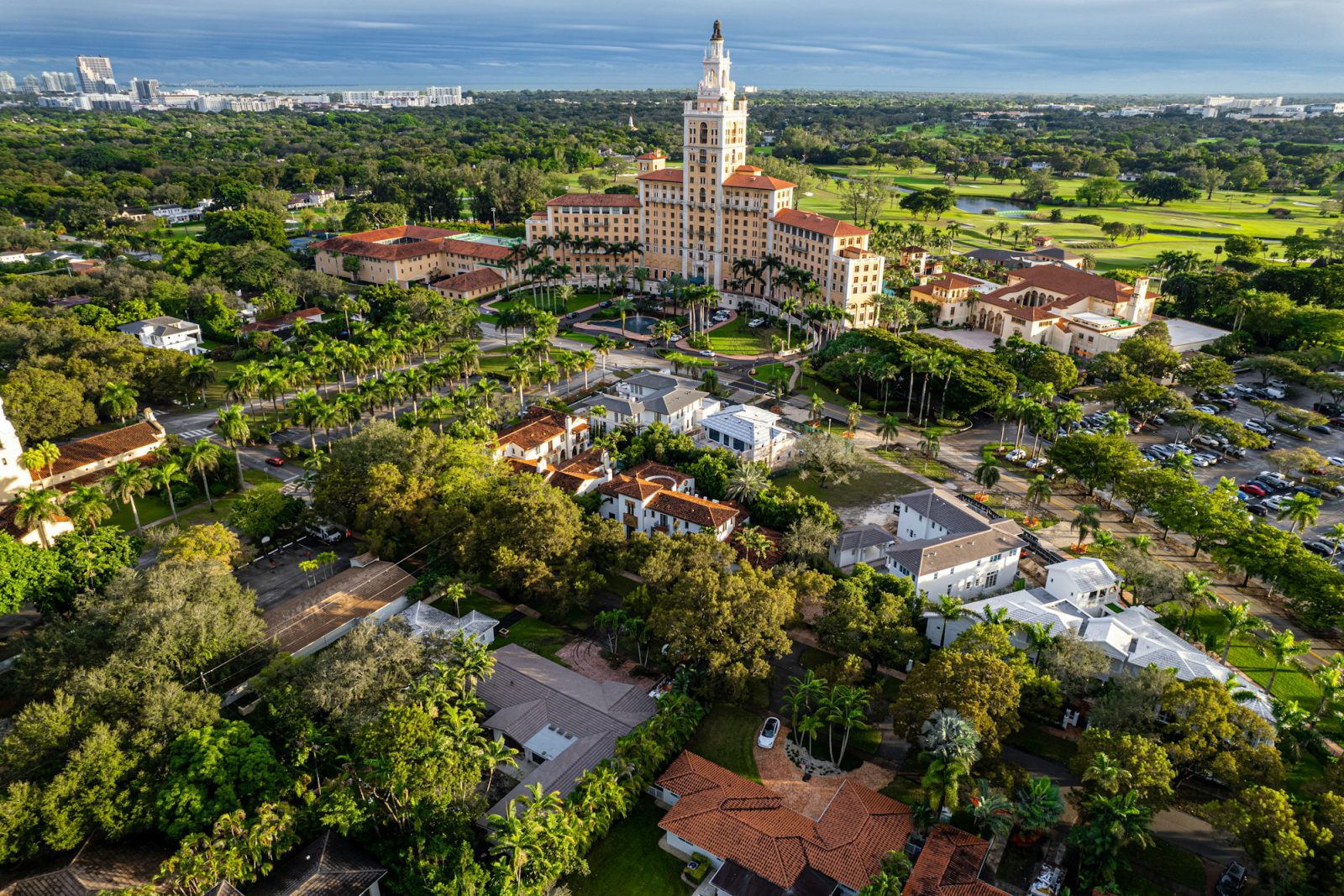
The architecture ranges from 1920s Mediterranean Revival homes with barrel-tile roofs and pecky cypress ceilings to mid-century ranches and contemporary new builds that respect the old proportions.
The neighborhoods within the city
- North Gables: walkable streets near Miracle Mile and Giralda Plaza, with a mix of historic homes and townhouses.
- The Granada and Riviera golf areas: larger lots overlooking the city’s two public golf courses.
- South Gables and the University of Miami area: family homes on wide lots, close to UM and the Shops at Merrick Park.
- Cocoplum and Gables Estates: gated waterfront communities with deep-water dockage and some of the most valuable homes in South Florida.
Prices
Coral Gables is not cheap. Condos and townhouses start around $650,000, while a renovated three- or four-bedroom house typically costs between $1.8 and $4 million. Waterfront estates in Gables Estates and Cocoplum regularly trade for $10 million to more than $30 million.
Buyers come for the architecture and stay for the schools and the shade. Almost every street has a canopy of oaks or banyans, and in August that really matters.
Isabella Marín, Founding Broker
Daily life
Miracle Mile and Giralda Plaza are the heart of the city, with restaurants, cafés and independent shops. The Venetian Pool — a 1920s swimming pool carved from a coral-rock quarry — is a local treasure, and the Biltmore Hotel’s golf course and Sunday brunch are institutions. The free Gables trolley connects downtown to the Douglas Road Metrorail station.
Schools
Coral Gables has several highly rated public schools and some of Miami’s best-known private schools. School boundaries matter here, so check them carefully before you make an offer.
What to watch out for
- Permits: renovations take longer than elsewhere in Miami. Budget time for design review.
- Older homes: 1920s houses can need new plumbing, electrical and roofs. Get a thorough inspection.
- Flood zones: properties near the waterways and in the southern part of the city may require flood insurance.
A weekend in the Gables
The best way to understand Coral Gables is to spend a Saturday there. Start with coffee and pastries on Giralda Plaza, where the street is closed to cars and tables spill into the road. Walk Miracle Mile to the Coral Gables Museum, then drive the loop of Granada Boulevard and Alhambra Circle past the golf course and some of the city’s finest 1920s homes.
In the afternoon, swim at the Venetian Pool, with its grottoes and waterfalls, or tour the Biltmore Hotel and its famous tower. Finish with dinner in the restaurant row around Ponce de Leon Boulevard. By the end of the day you will know whether the Gables’ calm, leafy rhythm is right for you.
Commuting
Most of the Gables is fifteen to twenty minutes from Brickell and the airport outside rush hour. The Metrorail serves the eastern edge of the city, and the free trolley covers the central business district.
Who it suits
Families, professionals who work at UM or in the Gables’ office district, and anyone who values architecture, greenery and a strong sense of community.
See every Coral Gables listing, or cross US-1 to explore Coconut Grove. Two homes on the market this week:

Brand-new townhouse on a tree-lined Gables street
Coral Gables
- 3 bedrooms
- 3.5 bathrooms
- 2,450 sq ft
 Linh Tran
Classic Coral Gables Mediterranean on Granada Boulevard
Coral Gables
- 5 bedrooms
- 4.5 bathrooms
- 4,350 sq ft
Linh Tran