The opening lap of a motorcycle grand prix is the only part of the race where the field is compressed into a space that cannot hold it. Everything afterwards is a consequence: which rider found clean air, who lost three places without making a mistake, and which of the pre-race plans survived contact with the first braking zone.
The launch is a traction problem
A start is not a test of reaction time so much as a test of how much of the engine’s output the rear tyre will accept from a standstill. Too little and the rider is swallowed by the row behind. Too much and the bike either spins or lifts, and both cost more than a slow release would have. Everything the machine can do to help — launch control, ride-height devices, holeshot mechanisms — exists to widen that narrow band of acceptable inputs.
The surface matters more than it seems. Grid slots differ in cleanliness and grip, and the difference between the racing line and the dusty half of the grid is enough to change a start. Riders know which side of the track their slot sits on and adjust their expectations before the lights ever go out.
The first corner is geometry, not courage
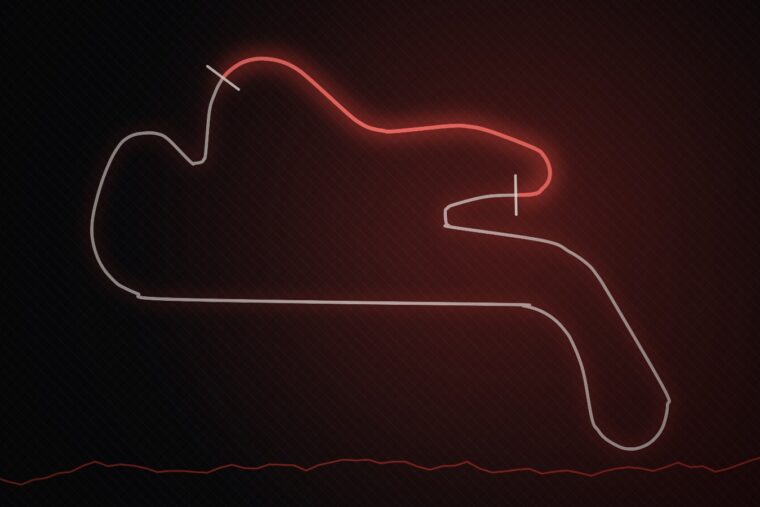
Whether a start can be converted into positions depends almost entirely on the layout. A long run to a heavy braking zone gives a rider from the third row a genuine opportunity, because the field is still finding its order and the corner is wide enough to hold several lines. A short run into a fast, narrow turn does the opposite: the order is essentially fixed and the only skill available is not losing places.
This is why the same grid slot means different things at different circuits. A front-row start is worth more where following is hard and passing is rare; a mid-grid start is survivable where there are three or four real overtaking corners and a race distance in which to use them.
The first lap is not where a race is won. It is where the number of ways to win it is decided.
The cost of the scramble
Positions gained in the first two laps are real but rarely free. Passing several riders means braking later than planned, using more of the tyre than the plan allowed and often taking compromised lines that scrub speed. A rider who arrives at lap three having gained four places may have spent the resources that were supposed to deliver the last ten.
The opposite mistake is just as expensive. Riders who are cautious into turn one frequently spend the following laps stuck behind machines they are quicker than, losing time they will never recover and heating a front tyre in another bike’s wake.
Where the race actually settles
By the third or fourth lap the field has usually sorted itself into groups, and those groups tend to be sticky. A rider who ends the opening exchanges attached to the leading group has a race. A rider left in the gap between groups is riding alone, without a reference and without a tow, and will generally finish where the first lap left them.
What to watch
Watch the second row rather than the front. That is where the biggest swings happen, because those riders have both something to gain and a clear view of the corner. Then watch the exit of turn two: whoever is already in clean air has the race they wanted, and whoever is not has just had their afternoon rewritten.