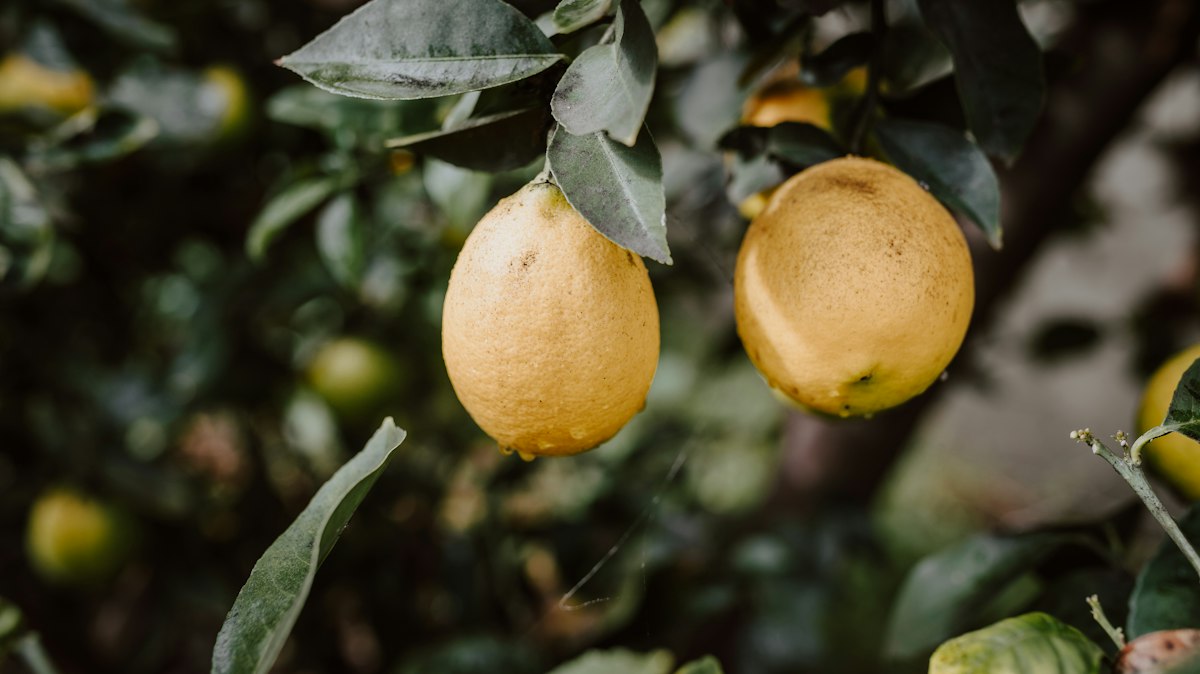
The lemons of the Amalfi Coast are not the lemons you buy in a net bag at home. The Sfusato Amalfitano, protected as an IGP, is long, pointed and heavy with juice, with a thick, fragrant skin and a mild acidity you could almost eat. You notice them first as pergolas of yellow hanging over a path, and then, once you know where to look, on every menu.
Terraces built by hand
The groves climb the cliffs on terraces held up by dry-stone walls. Chestnut-pole pergolas shade the trees, and in winter growers cover the frames with mats or nets against cold wind. Almost everything is done by hand. Many groves have no road, so lemons are carried down steps in baskets, or hauled on small rail hoists in the steepest places. An hour in a grove with a farmer is one of the best things you can do on the coast, and the quickest way to understand why a good lemon costs what it does.
Two lemons, two coasts
Sorrento has its own: the Limone di Sorrento IGP, rounder and a little squatter, grown under straw mats in the same terraced style. The Amalfi lemon tends to be larger and sweeter, the Sorrento one slightly sharper. Locals on each side will tell you theirs is better. We recommend eating both.
What to eat and drink
- Delizia al limone. A sponge dome filled with lemon cream and covered in lemon glaze. A Sorrentine invention from the late 1970s, now served everywhere.
- Limoncello. Alcohol infused with lemon zest, then sweetened with syrup. The good ones use peel only, never pith, and arrive very cold in a small glass after dinner.
- Spaghetti al limone. A simple lunch: lemon juice and zest, olive oil and cheese, tossed through the pasta off the heat.
- Insalata di limone. Thin lemon slices with mint, olive oil and chilli, served beside grilled fish.
- Granita al limone. Best from a bar on a hot afternoon. The texture should be coarse, not smooth.
How to buy and use them
Look for lemons with the leaf still attached, a sign of a recent harvest. Zest them before you juice them, and use a fine grater rather than a peeler to avoid the pith. To bring a taste home, buy limoncello or lemon marmalade directly from a family producer, and buy ceramics from the workshops in Vietri sul Mare to go with them.
The harvest
Lemons are picked in several flushes through the year, with the main crop in spring and summer, so you will see ripe fruit in any month. The groves are at their most fragrant in April and May, when blossom and fruit hang on the tree together. Several farms around Amalfi, Maiori and Sorrento offer short tours with tastings. Ask your host to book one, because the best producers take only a handful of guests a day.
If cooking is your reason for coming, the cooking and food collection lists stays whose hosts run classes, markets walks or lemon-grove lunches.