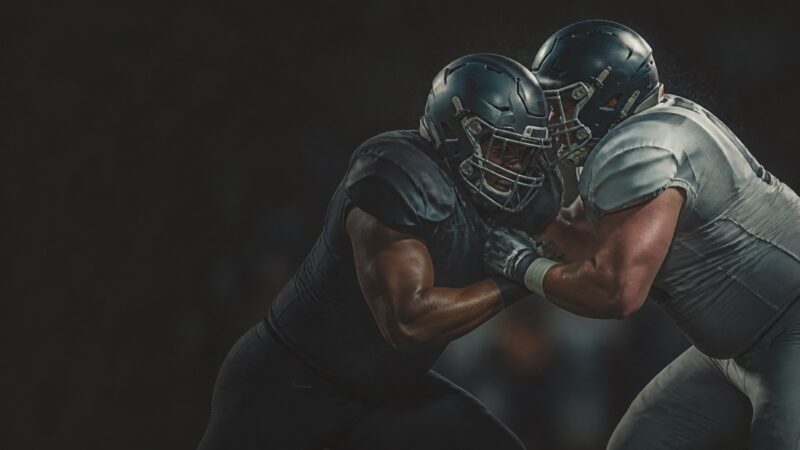



















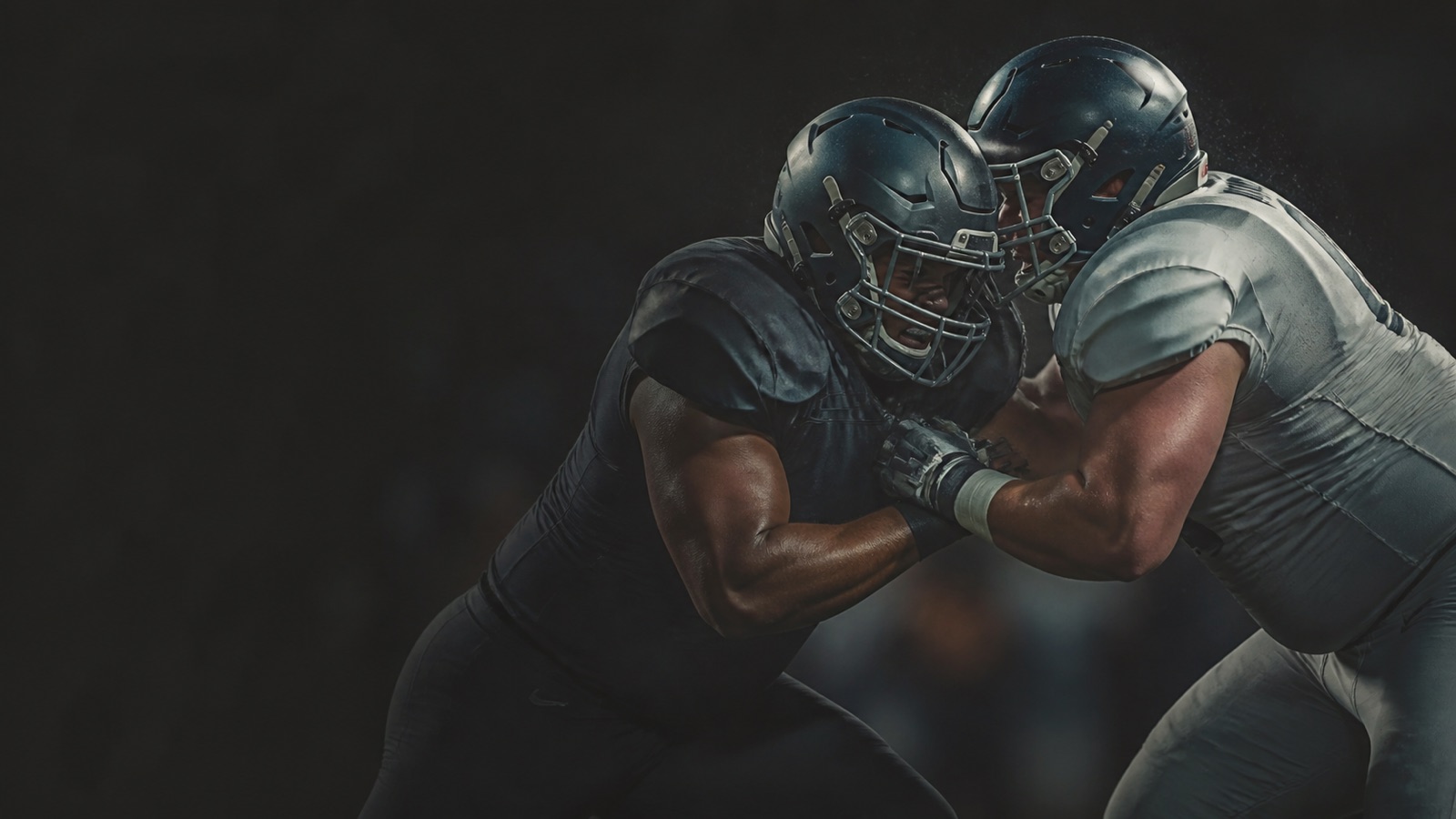
A sack looks like an act of speed. On tape it is almost always an act of geometry, settled several steps earlier by two players arguing about the same piece of ground: the corner the rusher wants to bend around, and the corner the tackle wants to make him run past.
The first two steps set the price
An edge rusher’s opening steps are a bid. Go hard upfield and the tackle has to open his hips and retreat quickly, which creates an inside lane if he overcommits. Attack the tackle’s inside shoulder and he has to stop his slide, which reopens the edge. Neither move works on its own. What makes a rusher difficult across four quarters is that the first two steps look identical on all of them.
The tackle’s answer is his set — the depth and angle he takes off the snap. A vertical set meets speed early and dares the rusher to convert to power. A shorter set keeps him closer to the quarterback and concedes an outside path he believes he can run the rusher past. Both are wagers, and both are readable, which is why rushers spend more of a week studying how a tackle sets than how he finishes.
Hands decide it
Almost every rush is settled by whoever gets their hands inside first. A tackle who lands two hands on the rusher’s chest can steer him. A rusher who swipes those hands away before they land keeps his own frame clean and his path short. This is the part of the play nobody watches, and it is the whole play.
It is also why the counter matters more than the move. A rusher with one plan is solved by half-time. A rusher who has spent two quarters selling speed to the outside has bought himself an inside counter the tackle can no longer afford to ignore — and the tackle now has to defend both, which is the only circumstance in which either works.
The rusher is not trying to beat the tackle. He is trying to make the tackle wrong about which thing he is defending.
Four rushers, one shape
Individual wins do not automatically produce pressure. A rusher who beats his man cleanly to the outside and runs past the quarterback has created an escape lane rather than a sack. The rush has to hold a shape: edges squeezing the pocket inward, interior players pushing it backwards, and nobody vacating the space the quarterback would most like to step into.
That is what rush lanes mean in practice, and it is why a disciplined four-man rush is so valuable. It generates pressure without spending a defender, which leaves seven players in coverage and turns a quarterback’s second read into a bad idea.
Help changes the terms
Offences answer with numbers. A back kept in to chip the edge, a tight end held at the line, a slide protection that turns one-on-one into two-on-one — all of it removes a receiver from the route. So the rush wins something even when it does not get home: fewer bodies downfield, a shorter route tree, and a quarterback throwing into more coverage than he wanted to see.
What to watch
Pick one edge and stay with it for a full series. Watch how the tackle sets, watch whose hands land first, and watch whether the rusher’s third attempt looks anything like his first. The sack, if it comes at all, will be the least interesting part of the sequence.