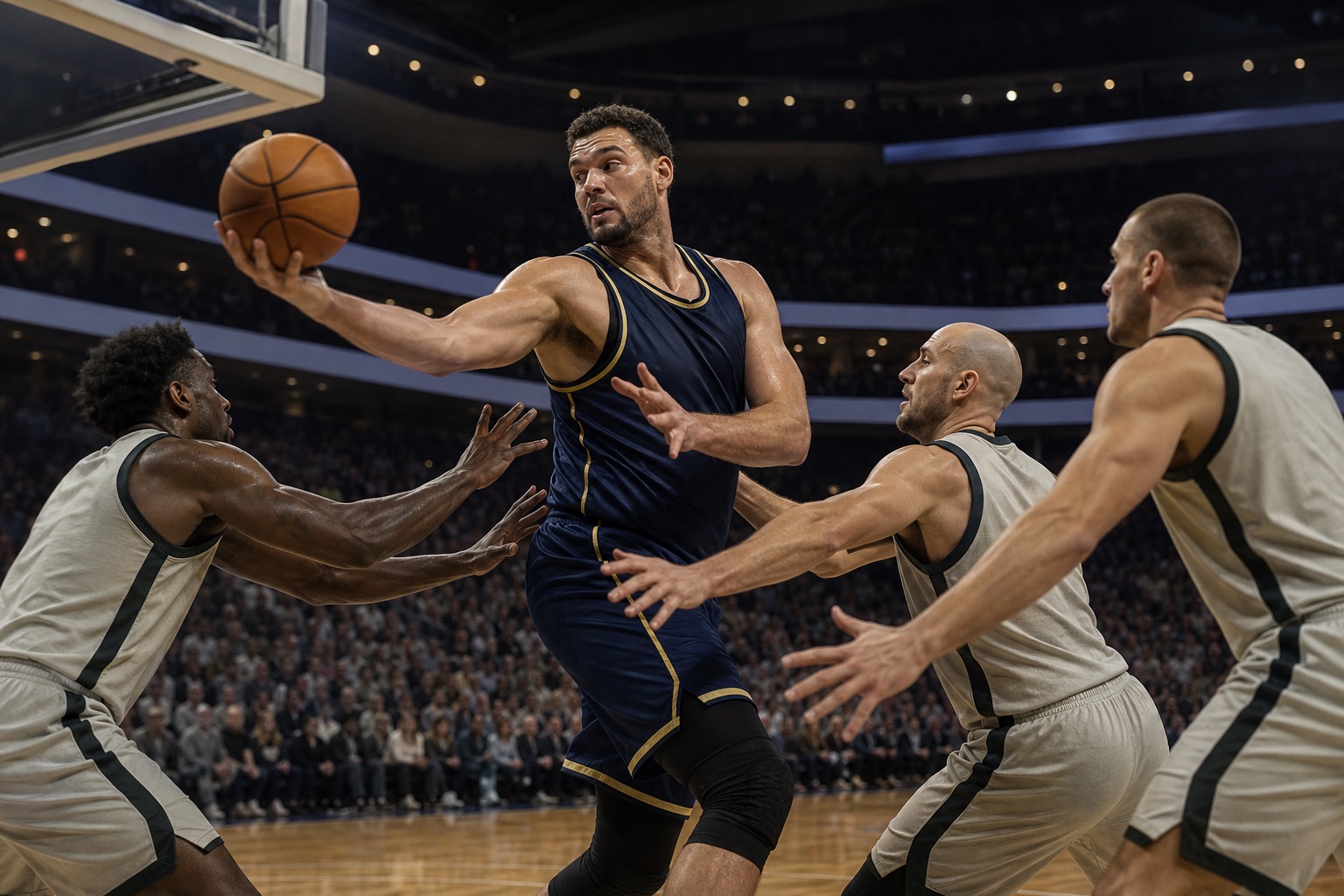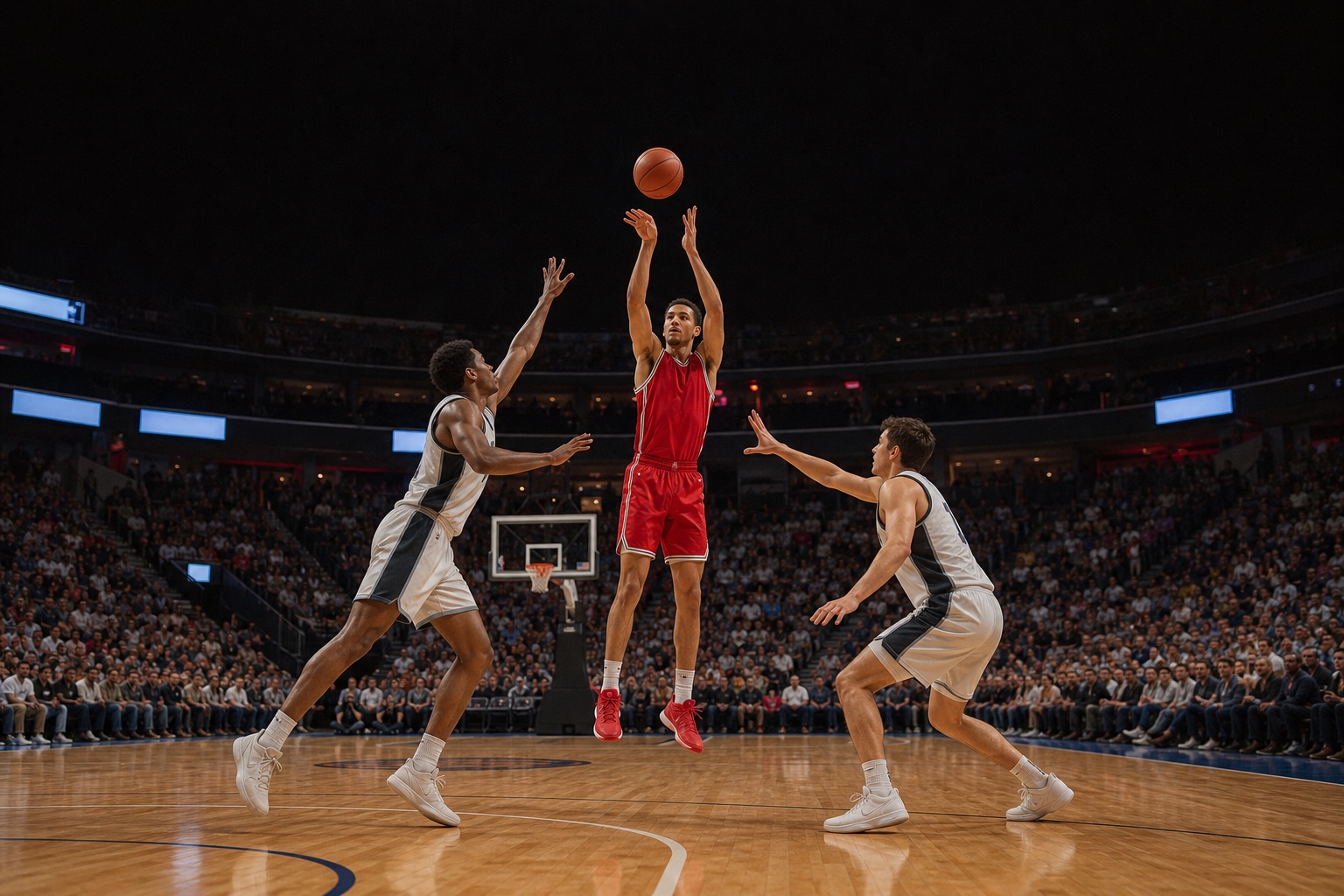











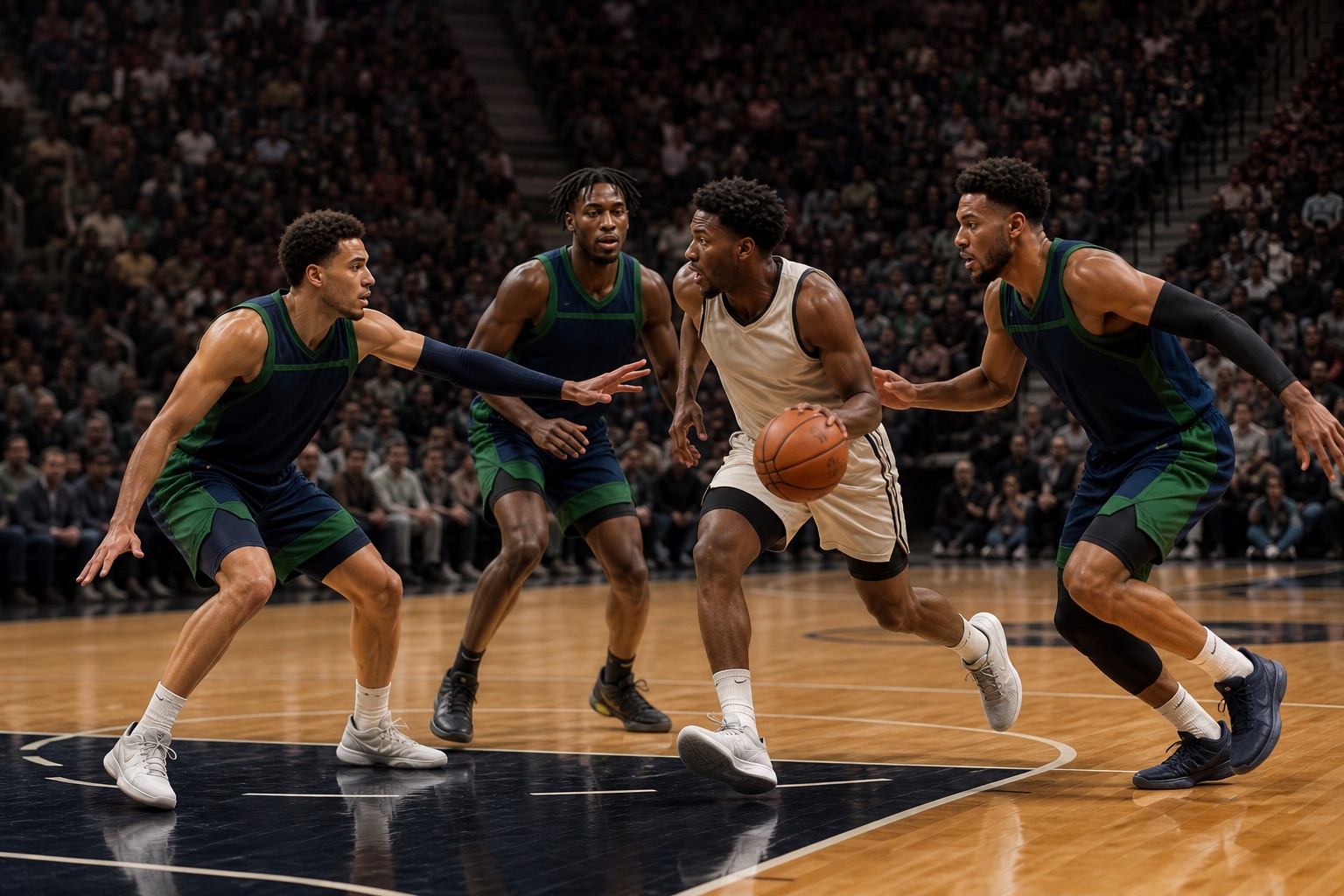
A driver turns the corner, a second defender steps across to meet him, and the possession appears, for a moment, to be under control. It is not. The help has solved one problem and created another, and the defence has roughly one second to decide who fixes it. Almost everything that separates a good defence from a bad one lives in that second.
The first rotation is instinct. The second is coaching.
Stepping in front of the ball is the easy part. Every defender in the league will do it, and most will do it well. The hard part is behind the ball, where a third defender has to leave his own assignment to cover the man the helper abandoned, and a fourth has to slide over to cover the third.
That chain is where possessions are actually decided. If it moves on time, the offence ends up with a contested shot from somewhere it did not plan. If one link is late — a single defender who watched the ball instead of counting bodies — the chain breaks, and the shot that follows is not merely open, it is open at the exact spot the offence chose.
The tell is usually the weak-side defender’s head. A player watching the ball is reacting to what already happened. A player whose eyes are splitting the ball and his own man is preparing to react to what happens next, and will start moving before the pass is thrown rather than after.
Scrambling is a skill, not an accident
Once a defence is out of position it is not lost, only late, and the recovery has its own craft. The priorities are ordered and rehearsed: protect the rim, then close out under control on the most dangerous shooter, then find a body for the rebound. Teams that scramble well look chaotic and finish possessions calmly.
Closeouts are where most of that recovery is spent or wasted. A defender who sprints out with high hands and a short final stride can contest without conceding the drive. One who arrives flat out, upright, has simply exchanged an open jump shot for an open lane, and the next rotation has to begin all over again.
Help is not a decision to leave your man. It is a promise that two other players are already moving.
Why defences slip in the middle of a season
Rotations decay quietly. They rarely break because a team stopped caring; they break because minutes changed, because a rotation big is out and the replacement reads the floor a beat slower, or because a group has stopped talking. Communication is the cheapest part of the whole system and the first thing to disappear on a long road trip.
Fatigue does the rest. The second rotation is the one that requires a full sprint from a standing start, and it is the one that goes first when legs are heavy. A defence that looks fine for three quarters and then concedes clean corner looks in the fourth is usually not being outschemed. It is simply arriving late.
What to watch tonight
Choose the weak-side corner and watch only that defender for a possession or two. Notice when he starts to move, not where he ends up. If he is already sliding as the drive begins, the defence is playing the whole floor. If he moves when the pass is in the air, the shot is going up open, and the box score will blame the closeout.