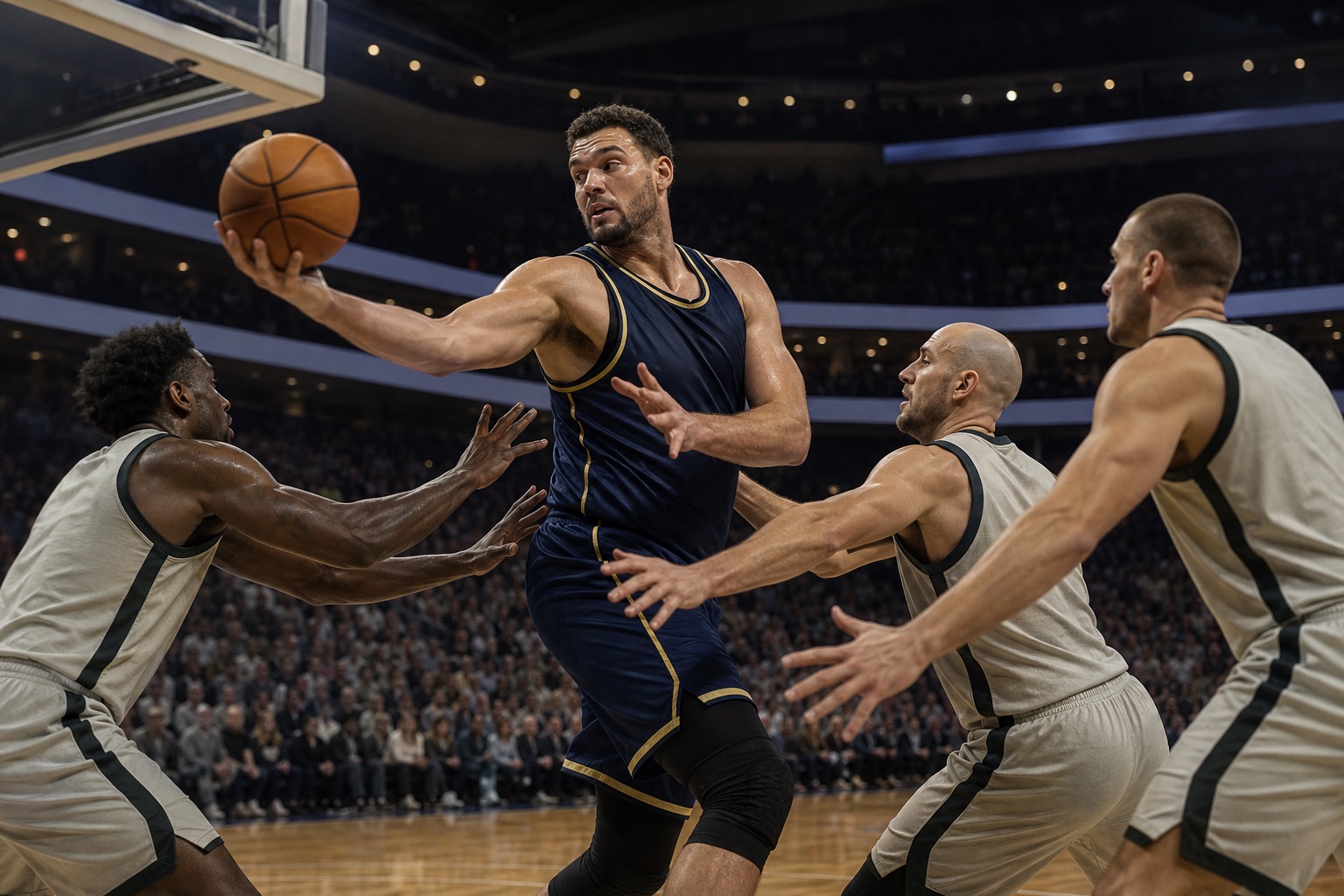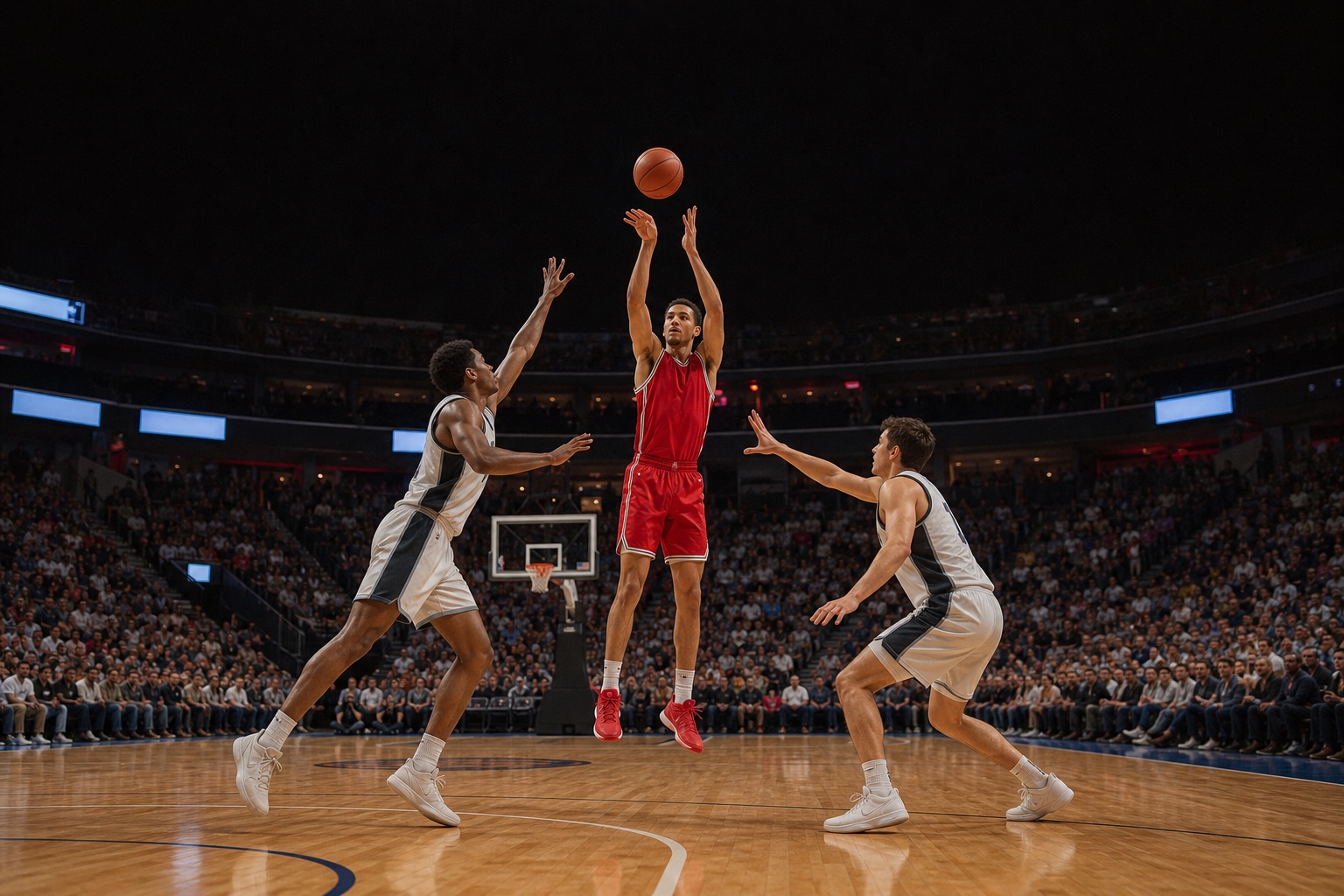











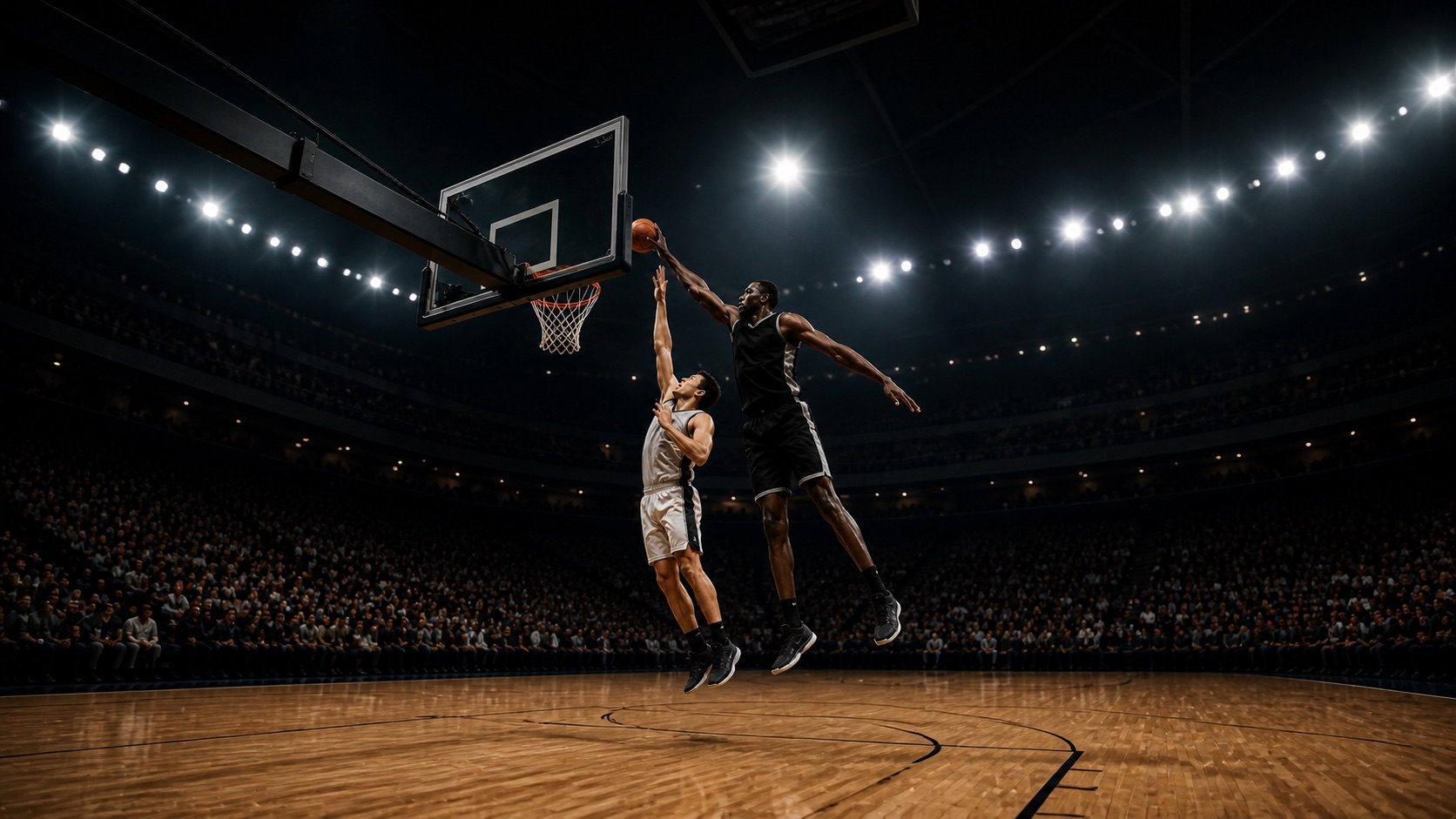
The photograph is always the last frame. A driver leaves the floor, a longer arm arrives at the same point in the air, and the building reacts to a single instant. What the frame cannot show is the sequence that made the meeting possible — a set of decisions taken while the ball was still on the wing and the shot was still only an idea.
The block starts two passes early
Rim protection is a scheduling problem before it is an athletic one. The centres who guard the paint well are usually the ones who read the second pass rather than the first. They begin sliding toward the help side while the ball-handler is still surveying, because they have already chosen which of the two players behind them they are willing to leave.
That choice is the job. Every rotation concedes something, so the useful question is never whether a defence gave up an open look but whether it gave up the look it meant to give up. A team that concedes a corner shot to a reluctant shooter has done its work. A team that concedes the same shot to the opponent’s most dangerous one has simply arrived late.
Timing is the other half. Meeting the ball too early invites the pump fake and the foul; arriving too late turns the contest into decoration. The most reliable protectors look slow in the first step and sudden in the last, which is usually a sign that they are moving on information rather than on instinct.
Verticality is a habit, not a rule
Staying vertical under the rim is often described as a technicality of officiating. In practice it is a training outcome. A player who has taught himself to rise straight, hands high, absorbing contact through the chest rather than swinging the arms, has removed the most expensive mistake available to a big man: two free throws and a seat on the bench.
Watch how a protector lands as closely as you watch him jump. A defender who comes down under control is available for the rebound and for the next possession. One who drifts into the shooter has traded a contested layup for an uncontested pair, and has usually lost the box-out behind him as well.
The best rim protection rarely produces a block. It produces a shot the offence did not want, taken by the player who was not supposed to take it.
The deterrent nobody records
Most of the value never reaches a box score. A guard who pulls up short of the paint, a roller who catches and resets, a wing who declines the drive and swings the ball back out — each of those is the defence working exactly as designed, and none of them appears anywhere except in the empty spaces of a shot chart.
This is why grading a defence by counting blocks tends to reward the wrong player. The chase-down specialist who gambles his way into rotation costs his team more possessions than he saves. The centre who never leaves his feet and never leaves his position saves possessions nobody notices.
Foul trouble is the natural limit on all of it. A protector sitting with three early fouls is a defensive scheme that has to be rewritten at halftime, and his replacement is almost always asked to do a smaller version of the same job with far less margin for error.
What to watch tonight
Pick the centre and follow him for a full possession instead of following the ball. Watch when he commits, where his eyes are when the drive begins, and whether the offence changes its mind. If the ball keeps travelling back out to the perimeter without a shot, the defence has already won the exchange — quietly, and a long way from the rim.